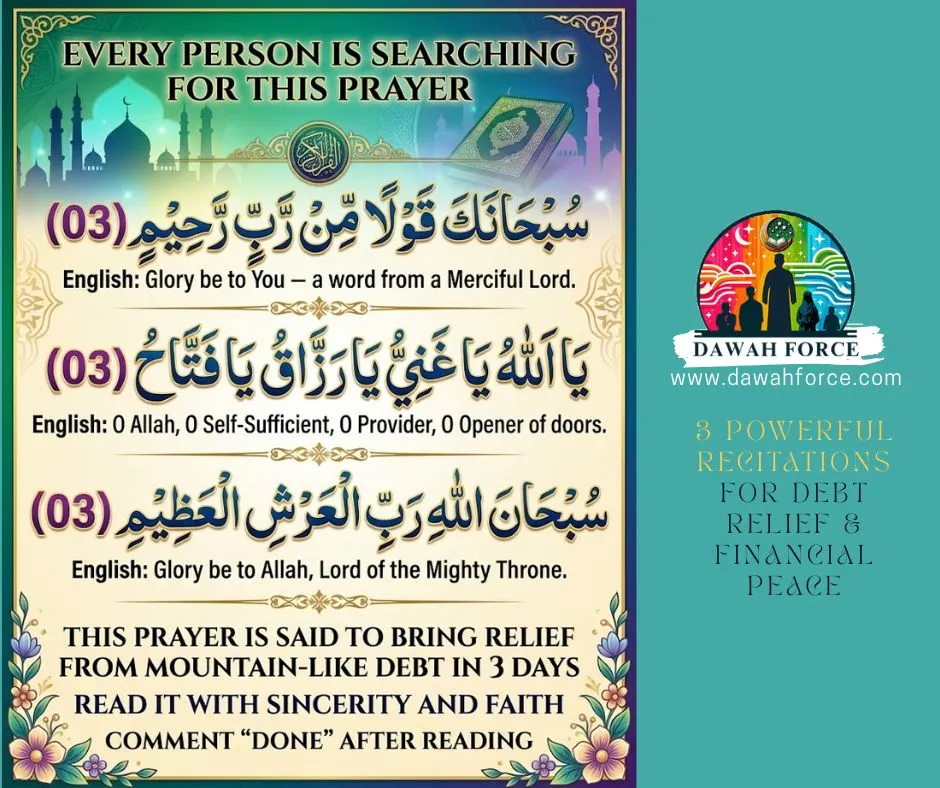
In a fast-paced world filled with unexpected financial pressures, emotional burnout, and personal uncertainties, many people naturally seek solace, guidance, and spiritual relief. The shared image reflects a deeply relatable human struggle: the search for peace, sustenance, and the relief of overwhelming burdens—such as debt—through spiritual devotion and daily supplication.
The text in the image highlights a selection of short, powerful, and cherished phrases from Islamic tradition, often recited as a daily wazifa or supplication routine to invite blessings, peace, and spiritual ease into one’s life.
Understanding the Core Content
The image opens with a compelling premise: “Every person is searching for this supplication.” It points toward a set of short, accessible recitations intended to be repeated three times each.
Here is a clear translation and structural breakdown of the recitations featured in the graphic:
1. The Message of Supreme Peace
- Urdu Transliteration / Text: “سلام قولا من رب رحيم” (Salamun Qawlam Mir Rabbir Raheem)
- Translation: “Peace!”—a word from a Lord Most Merciful. (Surah Yaseen, 36:58)
- Count: Recite 3 times.
- Significance: This verse is a powerful reminder of divine mercy and peace. In spiritual practices, repeating this verse brings tranquility to a restless heart and fosters a deep sense of divine protection and inner calm.
2. The Divine Attributes of Abundance and Provision
- Urdu Transliteration / Text: “يا الله يا غني يا رزاق يا فتاح” (Ya Allahu, Ya Ghaniyyu, Ya Razzaaqu, Ya Fattah)
- Translation: “O Allah, O Self-Sufficient One, O Provider, O Opener of Doors!”
- Count: Recite 3 times.
- Significance: Calling upon the Creator through His beautiful names (Asma-ul-Husna) is a foundational aspect of supplication:
- Ya Ghani: The One who is free of all needs, reminding us that all wealth belongs to Him.
- Ya Razzaq: The Provider who sustains all creation.
- Ya Fattah: The Opener who unlocks doors of opportunity, success, and relief when all avenues seem closed.
3. Glorification of the Lord of the Throne
- Urdu Transliteration / Text: “سبحان الله رب العرش العظيم” (Subhan Allah Rabbil ‘Arshil ‘Azeem)
- Translation: “Glory be to Allah, Lord of the Magnificent Throne.”
- Count: Recite 3 times.
- Significance: Praise (Tasbeeh) acknowledges divine greatness and majesty. Expressing gratitude and glorifying the Creator aligns the human spirit with humility, opening the heart to receive spiritual clarity and blessings.
The Promise of Debt Relief and Spiritual Focus
The lower section of the graphic emphasizes a message of hope: “This supplication removes debt as vast as a mountain within 3 days. Read it right now and write ‘Done’ in the comments.”
While social media graphics often use dramatic phrasing to encourage engagement, the underlying message speaks to a universal truth: sincere prayer, consistent remembrance (dhikr), and calling upon the divine names can bring immense spiritual relief during trying times.
Key Takeaways for Daily Practice
- Consistency Over Quantity: These recitations are brief, taking less than two minutes to complete. Making them a habitual part of your morning or evening routine helps maintain a continuous spiritual connection.
- Mindful Intent (Niyyah): When reciting these phrases, focus on their meanings. Reflecting on Allah as the “Opener” (Ya Fattah) instills optimism and resilience when facing life’s obstacles.
- Balancing Faith and Action: In traditional wisdom, spiritual supplication goes hand-in-hand with practical effort. Pair your prayers for financial ease and debt relief with practical budgeting, hard work, and honest enterprise.
By keeping these short phrases close to your heart, you cultivate a daily space for mindfulness, gratitude, and unwavering hope.